Trying to change and feeling that you’re being held back by your own value system can be frustrating. Two weeks ago, I wrote about how hard it is to break with our most deeply rooted values. The key point was, that they can’t just be abandoned, but that they can be replaced.
If that suggested that replacing your values is easy, it’s not. Changing values is not impossible, but it is tough.
I was raised in a traditional, mostly Christian community. Although my parents didn’t actively attend church, they nonetheless adopted most of the Christian values; as did my friends, neighbours, and pretty much everyone around me. And being shaped by my environment, so did I.
Growing up as a gay person, some of those traditional values didn’t fit anymore. Including, that love can exist not only between one man and one woman, but between any other combination of human beings.
I remember a time when I was a teenager and accompanying my parents to a birthday party. Among the guests were two men, and I noticed the way they interacted and spoke with each other. Somehow, it was different than I expected. With some shock, it hit me that they were apparently a couple.
Why the shock? I was perfectly ok being gay. I knew about same sex relationships. Still, there was that moment of discomfort, wondering, questioning.
You may have a story of your own. Starting with a realization that certain values were no longer yours, followed by a decision you made to do things differently. On a rational level you were clear. But change only came much later.
The gap between deciding and doing
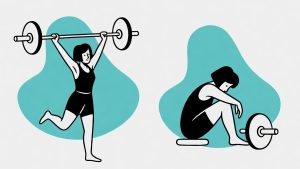
That moment following a decision to change but where the same hesitation, same patterns, same internal reactions still show up is key. It’s where people start doubting themselves: “Did I really change, or was I just thinking about it?”
There is a reason behind that lag in making change and the emotional discomfort you may feel in the process. You are essentially running two parallel tracks. Old values are not just ideas—they’re embedded through repetition, habit, and identity. Although your thinking has updated, your emotional and behavioural system hasn’t.
Why behaviour lags behind insight
The values that you live by have been reinforced over years: through family, environment, rewards, consequences. Keep your promises, always try your best—examples of values that you have heard, seen, tested and proven so many times they feel like universal truths. They’ve carved themselves into your memory and emotional responses and formed patterns that are hard to steer away from.
Even after you make a rational decision to make a change, your behaviour is initially still driven by those vested patterns, adhering to those old values.
When your own value system is in the way of change, you may get doubts about the direction you took, or feel like you’re making a mistake. It’s easy to confuse this for inconsistency or lack of discipline. In reality it’s just a matter of your emotional and behavioural system catching up.
Forcing change won’t work
Changing behaviour is not a matter of a single decision, no matter how much you want it. It only happens through repeated new behaviour.
An example is reducing stress. Rather than just “deciding to relax” you’ll need to move through small psychological shifts. For example recognizing the physical onset, introducing a 30-second reset, and building in daily moments to decompress.
By taking small steps, through actions that align with the new value, you gradually rewrite those patterns in your brain.
All those years ago, I learnt that being gay is about more than accepting myself. It took adjusting my value system, including a new concept of (chosen) family, unlearning gender roles, redefining relationship dynamics. Once you realize that becoming aware of a new value or taking a decision is only the starting point and not the complete transformation, you can stop fighting yourself—and start working with the process instead.