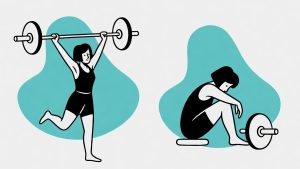
There are stages in life where nothing is obviously wrong, yet somehow it is.
What I mean by that is, your life may still be functioning well in practical terms. You are capable, you meet expectations, and there is no visible crisis that would justify a dramatic decision. Yet internally, the way you operate and that once felt natural somehow now seems to require more effort than it used to.
It’s easy to interpret that shift as tiredness, fading ambition, or a temporary dip in motivation. In my experience, it is often more structural than that. An indication that the version of you that was necessary and good for an earlier stage of life simply may no longer align with the stage you are entering now.
How identity forms
Most of us don’t design our identities deliberately but form them gradually as we adapt to circumstances. Whatever life required from us to remain stable, effective, resilient, we became. Check the last version of your resume and you’ve probably called out all the traits you intelligently acquired in response to real environments. Reliable, driven, composed. And so on.
Over time, those responses and traits start to solidify. What began as strategic, context-dependent adaptations start feeling like fixed characteristics – our essence, our identity. And we start telling people, “This is who I am”.
A real-life pause that changed the question
I was reminded of this recently by a client who had been retrenched after ten years in a company where he had done well and, by most measures, been happy. Although the redundancy was not something he planned, it created a welcome pause for him. For the first time in a decade, he was no longer following a corporate agenda from quarter to quarter, but able to sit still and think for a minute.
At first, his attention was on the practical next step. He updated his CV, reached out to contacts, and began exploring similar roles. On paper the mission seemed straightforward: find another position at roughly the same level and continue the same trajectory.
Yet as the weeks passed, a different line of thinking evolved. The past ten years had provided financial stability and professional credibility. But they had also tied him to a rhythm that required physical presence and fixed hours. All the while, his priorities had been shifting in ways he had not fully noticed or acknowledged.
He told me that his parents overseas were ageing. And that he wanted the next phase of his life to allow him to support them better and spend more meaningful time with them. Another office-bound role would restrict that flexibility. The question gradually changed from “Which company should I join next?” to “What kind of working environment would allow me to live according to what matters now?”
That shift may seem subtle but it’s significant. Up to that point he had optimised his life for progression, income, and professional success. That worked, and it built savings, experience, and confidence. It was appropriate for a stage of life where building stability and independence were the central objectives.
Continuing to optimise for those now, would mean neglecting what had become more important. Instead of returning automatically to the same model, he chose to start an online business that would allow geographic flexibility and greater control over his time. Surely not an easier path, and one that comes with uncertainty. But it does align more closely with his current priorities.
That doesn’t mean his earlier career was a mistake. It served its purpose well. The key difference is that he stopped assuming that what worked before must automatically be repeated.
When success becomes inertia
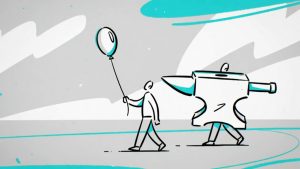
There’s a popular phrase: “The arrogance of success is to think that what you did yesterday will be sufficient for tomorrow.” attributed to writer William Pollard, and I think it applies here too.
Traits and decisions that once made perfect sense continue, even long after the conditions that shaped them have changed. Maybe because it feels rational and safe. Or because just never stopped to evaluate.
Updating the model
Growth at this stage is not about reinventing yourself for the sake of novelty. It is about recognising that identity is to a good extent constructed from past necessities. When circumstances and values evolve, it is reasonable for our priorities and focus to evolve as well.
The challenge lies in giving yourself permission to update the model. The previous version of you has evidence behind it. It has results, history, external validation and repeating it probably feels sensible. Still, your identity isn’t static. Periodically reassessing what you are living for is the smart and healthy thing to do.
If you find yourself questioning a role, a direction, or a version of yourself that once felt unquestionably right, that’s no reason for drama. It may just be an indication that your context has changed and maybe even that your values have shifted. Time to move on to bigger and better things.
My posts are written with some help of, but not by AI.
“It’s not ChatGPT. It’s me.”