As a coach, I often help people make decisions. Whether about a job, relationship, health or other change in direction. Most of the time that process starts with sketching the current state, all the reasons why that isn’t satisfactory anymore and what would be a better place to be in.
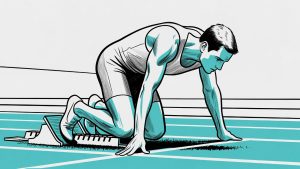
It then goes into evaluating options, and trade-offs. For example: ‘If I speed up, I might miss something – but if I slow down, I’ll be last to arrive.’
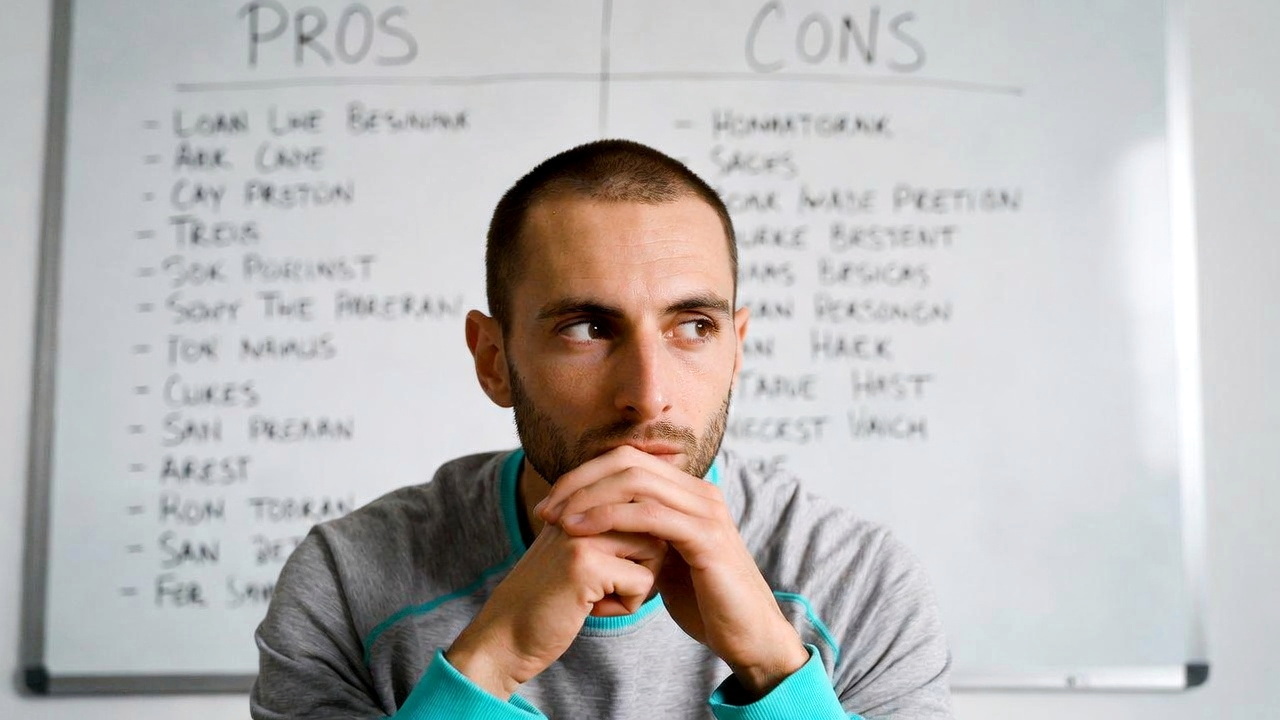
Building rational arguments pro- or con some decision is a skill. Some people absolutely excel at it. Salespeople, politicians, or consultants may have been trained in making very convincing logical cases. Others simply have a talent for it. Producing comprehensive arguments, especially those supported with data points, can sound extremely conclusive.
Yet, in many sessions, clients tell me that despite all that logical reasoning, they are still not making those decisions or have made them on paper but still fail to take action.
Why is that? Because something is still missing, or in the way. A driver or blocker that isn’t necessarily captured in words or numbers that can be rationally compared. You might call it intuition, an inner voice, or a gut feel. Whatever name you choose, some people trust it blindly. Others choose to ignore it. Some might not even know how to recognize it.
As a coach, I’m on the outside of those decisions my clients grapple with. Instead of relying on noticing an abstract “gut feel”, I observe physical changes—posture, tone, pace, facial expression—when certain options are discussed.
Rational arguments often point to what people think they should do. Physical responses tend to reveal what they actually want to do.
By looking for those external signals, I can make people aware of their responses to different scenarios. Even when they seem contradictory to the rational arguments.
One of the most telling signals I see in clients as they imagine their options for moving forward is relief.
Relief, from the outside, looks like something letting go rather than something being added. Shoulders drop, breathing deepens, speech slows. The face softens, and the need to keep explaining fades. It’s not energetic or excited. It’s quieter than that—just less tension than a moment before.
Relief typically signals alignment. Not that the decision is perfect or risk-free, but that something internal is no longer resisting it. The tension drops because, at some level, the choice fits—even if the mind is arguing against it.
The broader point to take away is that the human body is not just reacting to illness or stress. It continuously signals alignment or tension.
If you feel relief when you imagine a decision, it might be worth asking why you’re still arguing against it.