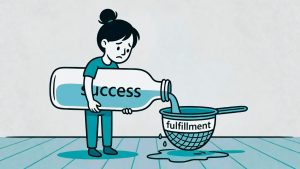
A friend mentioned recently he’d been planning to address something important for three years. He’d thought it through extensively, knew what needed to change, could explain the situation to anyone who asked. He knew exactly what conversation he needed to have, had rehearsed it in his head, understood why it mattered. The words were right there.
He just couldn’t make himself say them.
The Problem Of Staying Stagnant
I work with people navigating career transitions, relationship decisions, family dynamics, major life changes. The same pattern appears frequently: they possess all the right insights, but nothing actually changes.
That gap between knowing and doing creates its own problems. The longer someone sits with the insight without acting, the more doubt starts to creep in. “I still haven’t done it yet—does that mean this isn’t actually the right thing to do? Maybe the situation isn’t as bad as I thought. Maybe I’m overreacting.” The clarity that was supposed to help becomes clouded with second-guessing.
Why People Can’t Act On What They Know
There isn’t one reason why people can’t act on what they know. Different things block different people, often several at once.
Some underestimate what change will actually cost. Not just time or logistics, but emotional labour. A difficult conversation sounds manageable in your head. Then you count the anxiety beforehand, the exhaustion during, the weeks processing afterward, the relationship dynamics that might never recover.
Others don’t recognize or use available resources. They treat change like a puzzle to solve from scratch when information exists everywhere—books, articles, people who’ve navigated similar transitions, even AI tools that can help think through options. They don’t research how others approached it, don’t look for frameworks or methods that already work, don’t reach out to anyone who’s done what they’re trying to do.
Many go it alone emotionally without support. Change is difficult even with people in your corner. Without someone to check in regularly, to notice when you’re avoiding something, to sit with you through the discomfort, internal motivation loses to immediate comfort every single time. The emotional labour of change is harder to sustain when you’re carrying it entirely by yourself.
Fear of the unknown stops people frequently. Your current situation is familiar, even if unsatisfying. The new situation contains uncertainty. What if it doesn’t work? What if you make things worse? That fear shows up as endless research, more analysis, deeper understanding—anything except the actual leap.
Some wait to see the entire path before taking the first step. They keep researching neighbourhoods, jobs, cost of living. They know how a change would improve their life. Months pass. They keep researching. They’re waiting for certainty about every detail before starting, treating change like a project needing complete planning rather than a transition to navigate as it unfolds.
What’s Actually Missing
The gap between knowing and doing isn’t usually about lacking insight or motivation. It’s about lacking a pragmatic way to plan actions that are realistic, continue to motivate, and stay focused on your aspirations.
Actions need to be simple and realistic. Not solving everything at once, not tackling world hunger in one go. Breaking change down into steps that are actually manageable given your life, your energy, your circumstances. Something you can do this week, not something that requires perfect conditions that never arrive.
Actions need to create small wins with room for celebration. Not mountains that drain your courage and energy in the first mile. When every step feels daunting, you stop taking steps. Small wins build momentum. They remind you that progress is possible, that you’re capable of this change, that moving forward doesn’t have to feel overwhelming.
Actions need clear connection to the outcome you want. It’s easy to lose sight of why you’re doing this when you’re in the difficult middle part. Each action should remind you what you’re working toward, why this matters, what awaits you when you get there. That connection keeps you oriented when doubt creeps in or when immediate comfort calls you back to what’s familiar.
And part of being realistic means allowing yourself to fail. In fact, count on it. You’ll miss steps, backslide, make mistakes. That’s not the problem—that’s how learning and progress actually happen. Plans that require perfect execution guarantee you’ll give up the first time you stumble.
If you understand what you need to do but can’t seem to do it, let’s talk.