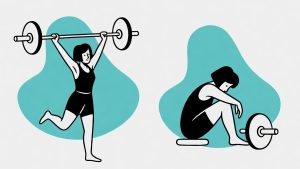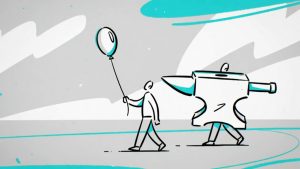
Do you feel work projects keep piling up, increasing pressure and stress?
If you do, you are not alone. A Gallup global report revealed this year that 41 percent of employees surveyed said they experienced a lot of daily stress, with many citing unreasonable expectations from leaders and a lack of mental health support as key drivers.
In many companies, change initiatives follow each other so rapidly that they leave little time and breathing room for people to see the benefits — to the detriment of their motivation and energy.
According to a study in the American Journal of Preventive Medicine, prolonged stress and burnout can cost U.S. companies up to $21,000 per employee per year due to lost productivity and staff turnover. It can also cost businesses nearly three times the average cost of health insurance and up to 17 times the cost of training per employee.
Stress leads to more problems and more stress
People who are experiencing high stress in the workplace and other areas of life often suffer from impaired judgment and decision-making.
I witnessed this firsthand as a law student in Amsterdam. Providing free legal counsel to disadvantaged members of the community was one of my first assignments. During this period, I observed financially stressed individuals sign up for credit cards from banks and loans from loan sharks, which, while temporarily alleviating their strain, dug much deeper holes for them. It became a trap that few could escape.
Stress most strongly affects decision-making when
- outcomes carry long-term consequences
- uncertainty is high
- results elicit strong emotions
- multiple stakeholders are involved, or
- identity and values are at stake.
How stress and pressure challenge us
Impact-wise, stress reduces working memory and cognitive capacity. Under high pressure, the prefrontal cortex (the brain region responsible for planning and weighing options) becomes less effective, leading many to rely on simpler mental shortcuts (or poorer judgments).
Also, when we feel anxious or nervous, we tend to seek short-term relief. Long-term actions and impacts are often overlooked when we are highly stressed. This is a very natural position to take, and I too have been guilty of choosing short-termism over long-termism on occasions.
Stress also narrows our attention. We may overfocus on one or two aspects of an issue rather than stepping back and considering the problem from other perspectives. This is common in conflict situations. In many cases if we manage to challenge our assumptions or reframe the issue, a problem can be resolved more swiftly and without escalating.
Turning pressure from a negative into a positive
Realizing how stress influences decision making might lead you to believe that creating a stress-free world is a goal we should pursue.
That would not just be unrealistic. It would be unwise too.
Pressure and stress are inherent to life and can be harnessed constructively to produce positive outcomes.
Sportspeople, for example, use nervous energy to help them focus and stay on edge before big games or races. Actors and musicians do the same before going on stage. Deadlines can also spark creativity in work projects or bolster teamwork as everyone unites to complete a task.
Coping in a High-Stress World
“How can I better manage stress?” is a question many of my clients ask themselves.
When we explore what stress really means to them, they soon realize it is neither a weakness, nor a sign of incompetence, nor a personal failing. It is simply a mechanism by which the brain reallocates resources.
Learning how to make better decisions in high-stress moments or environments is a core benefit of my coaching, because major decisions made under stress are more likely to be flawed.
By breaking down thoughts and feelings that are present in such moments, we find methods and techniques to slow down, externalize thinking, and create time and space for deliberation and reflection.
Reinforcing the notion that stress reduction is a vital part of “good decision hygiene,” not a “nice to have,” is another priority. In other words, breathing, pausing, resting, moving, and reflecting are cognitive interventions, or life hacks that we should all practice regularly.
My coaching helps you create a personalized decision-making framework designed to offset stress-induced biases. It promotes clarity, reframing, and slowing down processes to make better decisions – a skill that is relevant forever and every situation.
If staying calm under pressure and making confident decisions is a personal goal for 2026, please don’t hesitate to message me or schedule a free discovery session here.