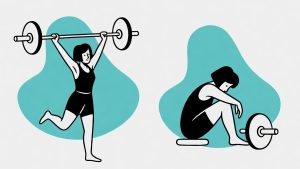
Are you one of those people who keep pushing for improvement but feel like you’re making no real progress? You work harder, take on more responsibility, invest in relationships, prioritize health—yet somehow you’re more exhausted and less fulfilled than before. Here’s what’s likely happening: you’re solving for the wrong thing.
The Equation Everyone Gets Wrong
When people face decisions—whether to take a promotion, end a relationship, commit to a new project—they construct an equation. Time versus money. Money versus happiness. Career advancement versus family life. They weigh the inputs against the expected benefits and make their choice.
But they’re treating fundamentally different resources as if they’re interchangeable. As if an hour of your time equals a certain amount of money, which equals a certain amount of relationship satisfaction. The equation misses what actually matters: energy.
Energy is the only currency that makes everything else possible. Your body already knows this. You eat because it gives you energy. You sleep because it restores energy. Every automatic function your brainstem controls exists to manage energy. Yet when you make conscious decisions about your life, you treat energy as an afterthought.
When Energy Problems Disguise Themselves
The consequences show up as other problems. Someone takes a promotion for more money but becomes too depleted to enjoy it. A parent commits to “being present” but finds the commitment drains them faster than it builds connection. A colleague who can’t say no wonders why they’ve lost passion for work they once loved. They think they have motivation problems, discipline problems, relationship problems. They don’t. They have energy problems.
Here’s where it gets counterintuitive: the activities you assume restore energy often deplete it. The weekly dinner with friends you cancelled to “preserve energy”? That might have been your only refueling activity. The exercise routine you dropped because you’re “too tired”? That could be preventing complete collapse.
People operating from depleted reserves make worse decisions, which deplete them further, which leads to worse decisions. Someone too exhausted to think clearly takes on another commitment they should have refused. The vicious cycle feeds itself.
This is why conventional advice fails. Telling someone with chronic energy depletion to “just be more disciplined” is useless. They’re running on reserves already exhausted.
Psychiatrists understand this—good ones prescribe holidays before medication. Scammers understand it too—they target people in crisis because depleted individuals make poorer judgments.
What Actually Restores Energy
I sometimes go birdwatching. That may seem trivial or unproductive. Believe me, it’s not. Sunlight, solitude, focus, quiet, no distractions rebuild amazing amounts of energy. Most importantly, I give myself over to nature—there’s little I can do to influence how many birds I spot. That matters because many things that deplete us come from trying to control outcomes beyond our reach.
When you map your actual energy flows—not what you assume energizes you, but what measurably does—the picture often contradicts everything you believed. The “trivial” activity turns out to be essential. The supposedly energizing pursuit reveals itself as a systematic drain.
This reframing changes what problems you’re solving. The question shifts from “How do I find motivation?” to “Why am I depleted?” From “Should I take this opportunity?” to “Will my energy balance support it?”
How I Help
As a coach, I help people become aware of their energy habits, flows, and net balance. This happens through systematic observation of what actually drains and restores them. Then we devise strategies for sustainable improvement—changing how you structure your day, building in recovery breaks, identifying which commitments to protect and which to release, finding your version of birdwatching.
Once you see your challenges through an energy lens, you’re finally solving the right problem.
If you recognize this pattern and want to figure out how to better manage your energy, schedule a free Discovery Session session reach out to me using the links at the bottom of this page.