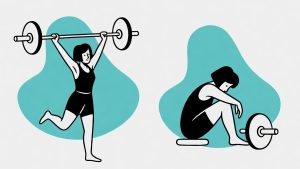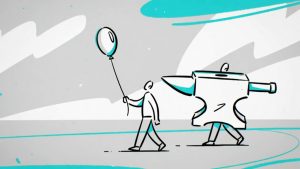
I keep seeing the same pattern across Asia Pacific: talented professionals frantically learning new technical skills, collecting certifications, mastering the latest AI tools. They’re convinced that piling up technical expertise will protect their careers.
They’re wrong.
Here’s what’s actually happening: Companies are restructuring roles not because people lack technical skills, but because they can’t navigate uncertainty. I watched an entire department get reorganised recently. The people who kept their roles weren’t the ones with the most certifications—they were the ones who could adapt.
The Technical Skills Trap
Everyone’s heard the advice: “Learn AI tools, stay relevant.” And yes, AI-skilled workers are seeing a 56% wage premium right now. Impressive. But here’s what that statistic misses.
I recently worked with a data analyst who spent six months mastering machine learning platforms. Then her role changed to emphasise strategic interpretation instead of technical execution. Meanwhile, her colleague—who’d focused on curiosity-driven problem-solving and cross-functional communication—smoothly transitioned into a hybrid role bridging technical and business teams.
The paradox is brutal: The skills that made previous generations successful—deep specialisation, mastery of specific tools—are now creating career fragility.
The World Economic Forum says 39% of today’s essential job skills will be obsolete by 2030. By the time you’ve mastered today’s essential tool, the landscape has shifted again.
Here’s the real issue: 75% of knowledge workers are already using generative AI, but most treat it as just another software application. They’re learning the mechanics that AI is about to automate, rather than developing what makes humans uniquely valuable.
AI isn’t just automating tasks—it’s redefining human value creation entirely.
What Actually Builds Career Resilience
The professionals who consistently navigate disruption share three capabilities that go beyond technical competence.
- Resilient Identity: The most vulnerable professionals define themselves by their job title. When AI reshapes that role, their entire identity crumbles. Stronger professionals anchor their identity in the problems they solve, not what their role is called. They see their unique mix of knowledge, experience, and talents as assets to deploy wherever needed. They constantly ask: “What value am I uniquely positioned to create?”
- Adaptive Curiosity: When ChatGPT emerged, many professionals sought training on optimising their existing work. That’s useful, but it’s not adaptive. Adaptive professionals don’t just learn to do existing work faster—they reimagine what’s possible entirely. They question assumptions, experiment with unconventional applications, imagine scenarios three steps ahead. Think about Netflix. While competitors focused on improving DVD delivery logistics, Netflix asked: “What if physical media disappears altogether?”
- Strategic Pivoting: Career-resilient professionals combine these into action. They’ve identified their unique value, explored new possibilities through curiosity, then ask: “How do I put these together to become something new?”
I recently met a marketing manager with 8 years of campaign strategy experience. When AI arrived, she didn’t just learn to optimise her existing campaigns. She asked three questions:
- What’s my unique value? Deep understanding of customer psychology and brand positioning.
- With AI, what can I do now that wasn’t possible before? Design campaigns that adapt in real-time, test hundreds of variations simultaneously, create personalised content at scale.
- What new role does this create? Marketing AI Orchestrator—someone who builds campaigns that learn and improve themselves whilst keeping them true to brand and customer needs.
She started small, tweaking regular campaigns with AI tools, testing different approaches, learning what worked and what failed. After several months, she proposed launching an “intelligent campaigns” initiative and leading it. The initiative became so successful it became her permanent role.
Strategic pivoting means preparing yourself for completely new ways of working, in completely new roles.
What This Means for You
About 170 million new jobs will be created this decade. They’ll require fundamentally different approaches to work than most professionals are currently developing.
The choice is binary: Will you build adaptive capabilities that create infinite career options, or will you optimise for today’s requirements whilst tomorrow’s landscape shifts beneath you?
Your career resilience doesn’t depend on what you know today. It depends on envisioning and learning what matters tomorrow.
Want to explore what building genuine career resilience looks like for you? Let’s talk.